 By cloudphones
- 18 Jan, 2026
- Technology
What is MDM and Why Your Business Needs It in 2026
The Mobile-First ChallengeIn 2026, the modern workforce is more mobile than ever. Employees work from offices, homes, cafes, and airports—accessing corporate networks and sensitive data from a growing array of personal and company-owned devices. While this flexibility boosts productivity, it also introduces significant cybersecurity concerns. Unmanaged devices accessing your corporate infrastructure are easy targets for malicious actors, creating potential entry points for malware and cyber threats.
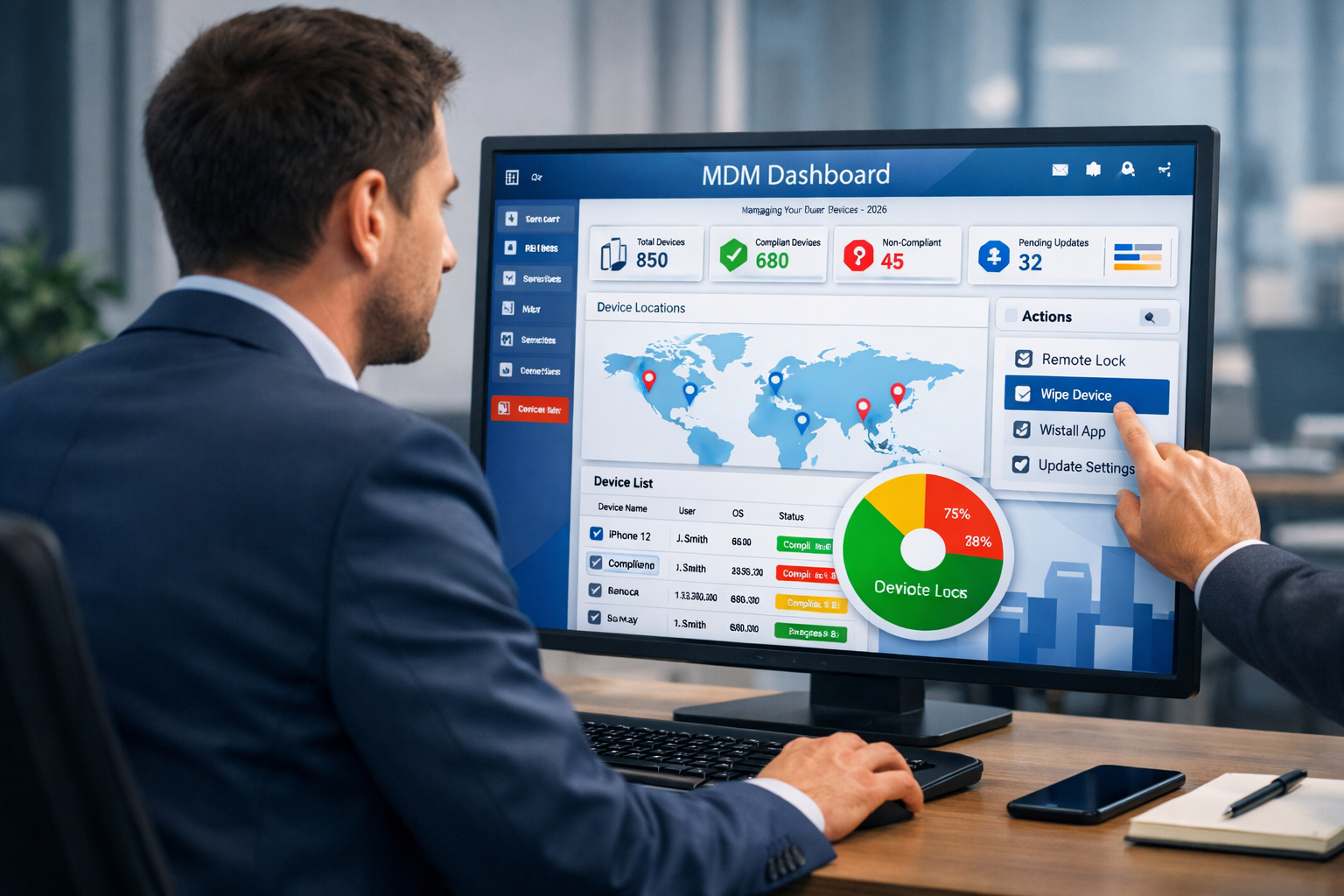
What is Mobile Device Management (MDM)?Mobile Device Management (MDM) is a software solution that allows organizations to securely manage and monitor mobile devices used for work purposes. At its core, MDM provides a centralized platform where IT administrators can enroll devices, enforce security policies, deploy applications, and remotely wipe data if a device is lost or stolen.
MDM works by leveraging device management APIs built into operating systems like Android Enterprise and Apple's MDM protocol. Once enrolled, devices connect to a central MDM server to receive configurations, apps, and commands, giving IT teams a bird's-eye view of all managed devices.
Why Your Business Needs MDM in 2026
1. Protect Against Evolving Cyber Threats With cyber threats growing more sophisticated—including AI-powered attacks, deepfakes, and malicious apps—MDM provides essential safeguards. By applying zero-trust security models, MDM ensures only verified devices, apps, and users can access business resources.
2. Enable Secure BYOD Policies Bring Your Own Device (BYOD) is increasingly common, but it creates security headaches. MDM solves this by allowing selective wiping—erasing only corporate data from a lost or stolen device without touching personal photos, contacts, or apps. This protects company secrets while respecting employee privacy.
3. Reduce IT Administrative Overhead Managing mobile devices manually is time-consuming and error-prone. MDM automates device provisioning, policy enforcement, software updates, and compliance monitoring—significantly reducing administrative overhead.
4. Ensure Compliance and Reporting For industries like healthcare, finance, and logistics, regulatory compliance is non-negotiable. MDM provides comprehensive compliance monitoring and reporting, ensuring devices meet security standards before accessing company resources.
5. Gain Centralized Visibility and Control From a single dashboard, IT admins can track device locations, monitor usage, enforce security policies, and push configurations to individual devices or groups. This centralized control is essential for managing diverse hardware ecosystems.
The Bottom Line MDM is no longer a luxury—it's a necessity for any organization embracing mobile work. By securing devices, protecting data, and streamlining management, MDM empowers businesses to thrive in an increasingly mobile world. Whether you're a small business or a large enterprise, implementing a robust MDM strategy is one of the smartest investments you can make in 2026.